


The Cheapest Investment Isn't Always the Least Expensive
What you don't see can cost you far more than what you do.
One of the first questions investors ask when comparing mutual funds and ETFs is:
"What's the expense ratio?"
It's a good question.
But it's not the best question.
Expense ratios are easy to find, easy to compare, and easy to understand. Because of that, many investors—and unfortunately some advisors—place far too much emphasis on them while overlooking one of the largest costs of investing:
Taxes.
Looking Beyond the Sticker Price
Imagine buying a car based solely on the purchase price while ignoring fuel costs, insurance, maintenance, and depreciation.
Most of us wouldn't do that.
Yet investors often evaluate investment funds the same way.
The expense ratio is simply the management fee. It tells only a small part of the story.
The real question is:
How much of my investment return do I actually get to keep?
Taxes Are Often the Hidden Cost
Every investment has the potential to create taxes.
Those taxes may come from:
- Capital gain distributions
- Dividend income
- Interest income
- The type of securities held inside the fund
While ETFs have gained popularity because they often delay taxable capital gains, that doesn't eliminate all tax costs. Funds that own securities such as REITs, for example, can generate dividend income that is taxed differently and may create a larger tax burden than investors expect.
The result?
A fund that appears inexpensive based on its expense ratio alone may actually cost considerably more after taxes are considered.
The Chart Says It All
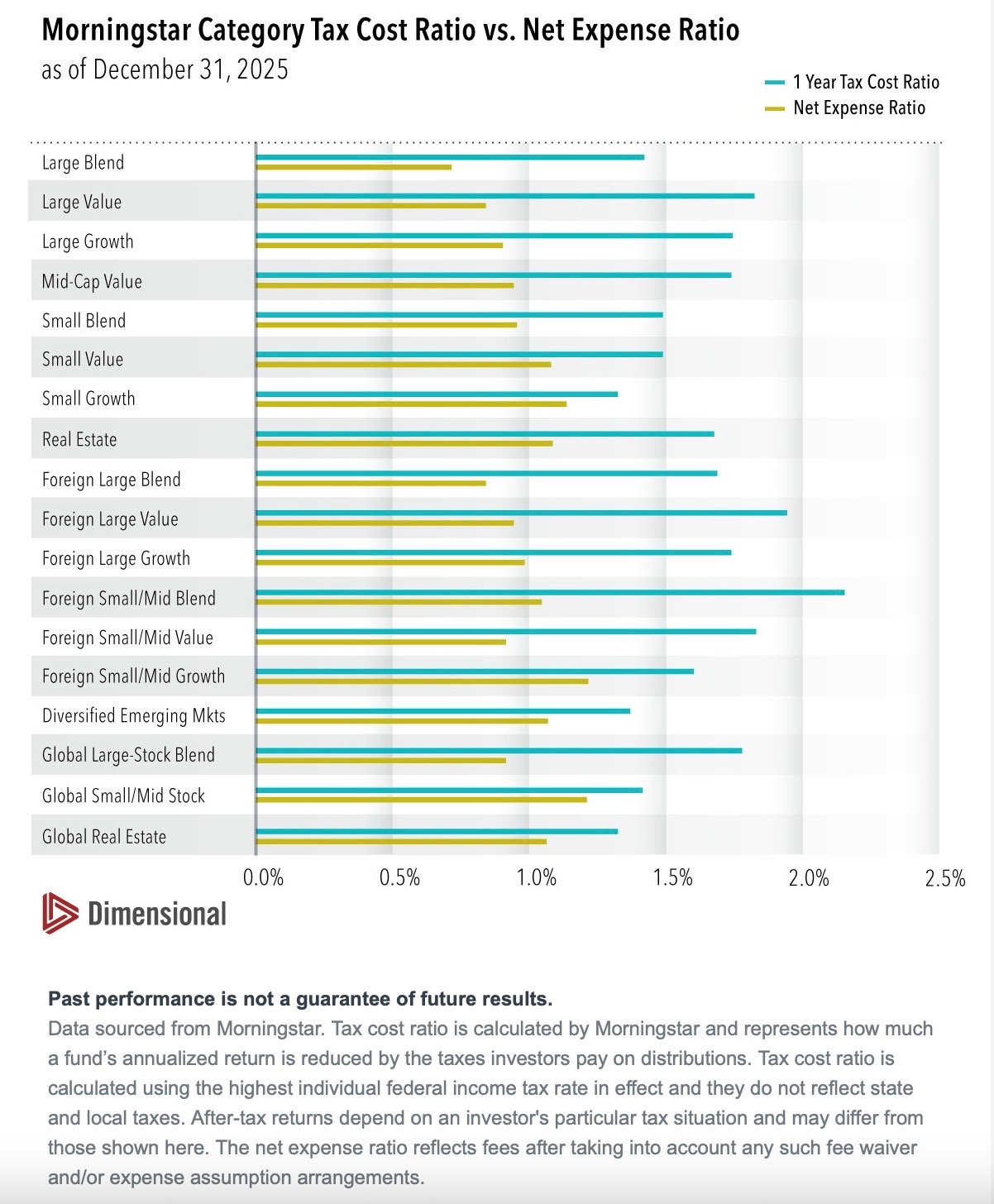
Notice that the Tax Cost Ratio—the percentage of return lost to taxes—can easily exceed a fund's expense ratio.
In some cases, the tax cost is twice as large as the published management fee.
That's an eye-opening reminder that the lowest expense ratio doesn't necessarily produce the highest after-tax return.
Wisdom Means Looking at the Whole Picture
At Epiphany Financial Coaching, we spend a great deal of time helping clients identify wealth transfers they may be making without realizing it.
Investment expenses are one transfer.
Taxes are another.
Insurance costs.
Financing decisions.
Investment behavior.
All of these work together to determine how much of your wealth you actually keep.
Rather than asking, "Which fund has the lowest expense ratio?"
A better question is:
"Which investment strategy leaves me with the greatest amount of spendable wealth after all costs are considered?"
That's a very different conversation.
And often, it leads to very different decisions.
The Bottom Line
The best investment isn't always the one with the lowest published fee.
It's the one that delivers the greatest value after accounting for every cost—including taxes.
When you begin looking beyond the obvious costs, you begin making wiser financial decisions.
That's exactly the kind of wisdom that builds long-term financial freedom.
Want a second opinion on your investment portfolio?
If you'd like to understand the true cost of your investments—including taxes, expenses, and other hidden wealth transfers—I'd be happy to help.
Sometimes the biggest opportunity isn't earning a higher return.
It's simply keeping more of the return you've already earned.
This article was inspired by research and commentary from Wes Crill, PhD, Senior Client Solutions Director and Vice President at Dimensional Fund Advisors. His ongoing work continues to help investors focus on the factors that truly influence long-term investment outcomes.